The Real Reason 70% of Startups Fail. It’s Not What You Think!
The Startup Graveyard Is Full of Solutions Without a Clear Problem: Here’s How to Avoid That Fate
Don’t lose the plot
Juicero launched in 20131. Juicero was trying to solve the problem of convenience in fresh juice preparation, but in reality it solved a problem that didn’t exist (or at least, not in a way that customers valued).
Juicero was trying to solve the challenges that came with juicing at home:
Fresh, cold-pressed juice is time consuming and messy to make at home.
Traditional juicers are bulky, hard to clean, and require prep work (chopping, peeling, etc.).
People want premium, organic juice at home without the hassle.
Through its value proposition to solve for these pain-points, Juicero raised $120M to create a WiFi-enabled juicer, similar to Nespresso, Juicero sold subscription based juice packs that were pre-filled and a machine starting ranging from $400-$7002.
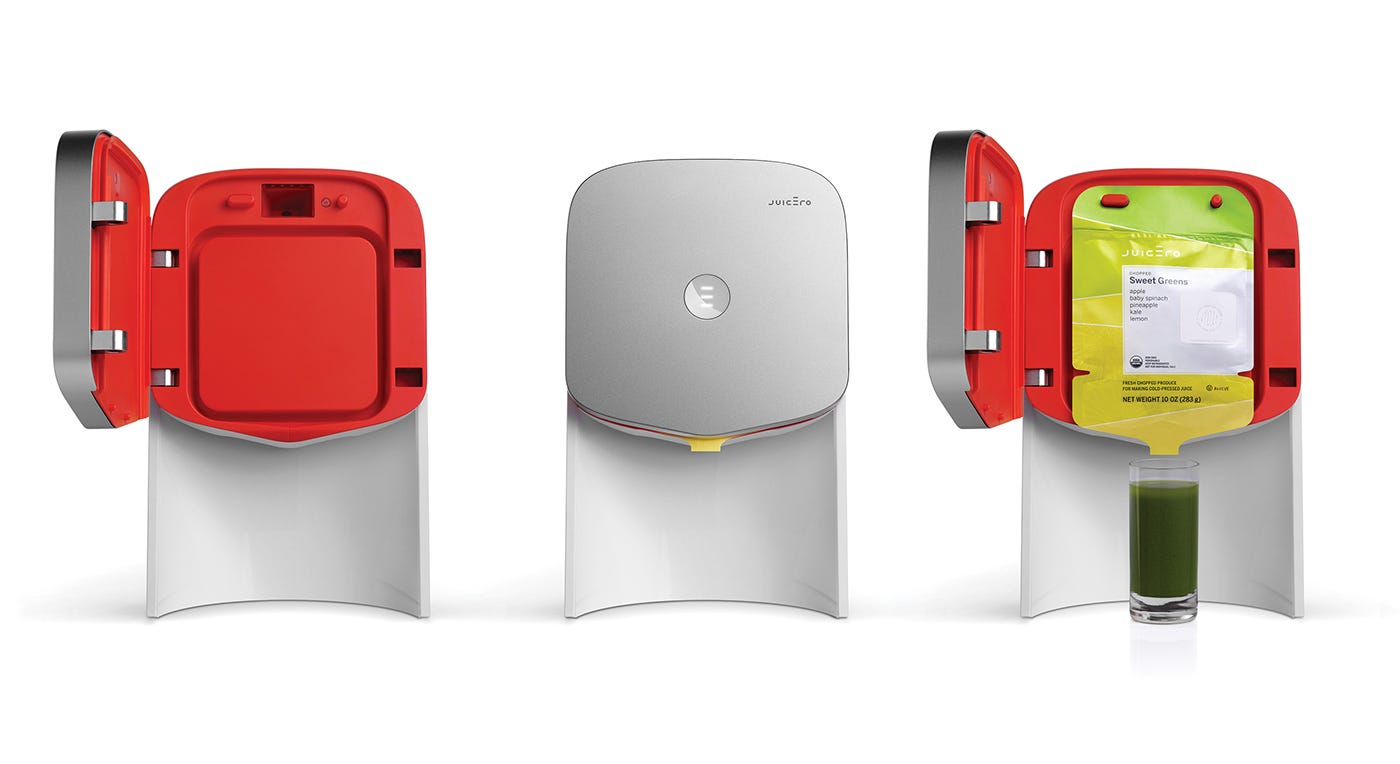
Image by: Juicero
Customers quickly discovered that the juice packs didn’t need the machine to be squeezed, they could just squeeze with their hands2. In addition, people who wanted convenience just bought bottled juice, so why invest in an expensive machine and a subscription for the juice packs?

Image: Bloomberg & https://blog.bolt.io/juicero/
Furthermore, this approach ignored the main customer: People who were health conscious and wanted a true cold-pressed juice, not a prepackaged overly processed juice pack.
In short, Juicero lost the plot.
Bringing fancy tech to the problem doesn’t sell products that do not solve a clear problem. According to CB Insight, 70% of startups fail because of "no market need." 3 Startups that deeply understand the problem they’re solving and they spend the time to continuously validate it have a much higher chance of success.
Talk to people
“Before product-market fit, your job is to talk to users.” – Michael Seibel, YC4. Your users/customers have stories that will not only tell you the problems they face, but the consequences of those problems not being solved.
Gaining this understanding and being able to deeply understand your user’s challenges helps you to build solutions that address the core of their problem, which builds the credibility of your product.
Problem-solution fit is when you have clear evidence that a real customer segment deeply needs and values your solution.
Zapier Enabled Non-tech Users to Connect Apps
In the early 2010s, SaaS tools were exploding in popularity such as Basecamp, Salesforce, Mailchimp, Evernote, and many more. Small businesses and startups often used multiple apps, but couldn’t easily connect data between them.
Zapier explored this pain point further:
Users had to manually make updates between different apps such as a new email for support should create a ticket in Trello, these had to be manually created.
If the user did not want to manually make an update, their option was to hire a developer and build an integration, which at the time was costly.
Zapier validated demand by talking to small businesses: freelancers, solopreneurs, marketers, etc.
“One of the things we realized was that people were using 10, 12, or even 20 different SaaS apps. They’d spend hours doing mindless tasks—copying info from one place to another. Zapier solves that. It’s like a helper that takes over the busywork.”
Wade Foster, Indie Hackers Podcast #59 (2017)5 (Timestamp ~14:15)
Many of the small businesses were already paying developers or spending hours on manual data entry, when the founders presented the concept of plug and play solution that connected different apps, the businesses loved the concept.
From these pain points, Zapier could define this problem statement as:
Small businesses often rely on multiple SaaS tools, like Gmail, Slack, and Mailchimp, to manage operations, customer data, and team communication. However, these apps rarely integrate seamlessly, forcing non-technical staff to spend hours manually transferring data or hiring costly developers to build custom solutions. This busywork drains valuable time and resources, preventing small teams from focusing on growth, innovation, and delivering value to their customers.
Zapier gained clarity on the problem early on and prioritized feedback from customers, talking to users or potential customers not only helped them to deliver towards the core problem, but also build a product that customers recommended to others.
Here’s the real fact: Startups with unclear problem statements take 2.3x longer to reach PMF.6 So this is not a “nice thing to do if you can,” but a critical step towards finding Product Market Fit.
It pays off (in a lot of ways) to be clear on the real problem that your users face and to build features that truly address their issues.
But what about Steve?

Source: Getty Images
“If I had asked people what they wanted, they would have said faster horses.” - Henry Ford (attributed)
This quote often floats around in parallel with Steve Jobs’ stance that users do not know what they want. He is famous for suggesting that you can’t really ask users what they want because their understanding of truly groundbreaking innovation is not visionary enough. Who would have dared to think of the iPhone in the 2000s?
In fact, Jobs didn’t conduct user interviews for the disruptive new line of smartphones. He created a category by building what he thought people needed.7
Steve Jobs, Henry Ford, Leonardo Da Vinci, and so many more visionaries are rare examples, they moved us into new categories of products and experiences which is an amazing accomplishment.
The question is: are you a Steve Jobs though? Perhaps if you have tremendous resources, a large budget for R&D, and a safety net in case of failure, you too can try to introduce revolutionary products and push the limits of current technology. The bottom line is: this is a high-risk strategy as you could build an amazing product that no one really wants, needs, or gets - there are countless examples of this.
Despite of being a visionary, even Henry Ford iterated on user needs (speed, reliability, cost) rather than purely ignoring them. The lesson is not to literally build what users ask for, but to decode their frustrations (e.g., faster travel) and innovate around the root cause. That’s different from ignoring them altogether.
Studies from Product Development & Management Association show that user-centered product development reduces the chance of failure by up to 30%, as teams iterate on real pain points rather than guessing.8
If your goal is to build a viable product that can scale, stand the test of time, solve real problems for users, the starting point is understanding your users' needs, pain-points, and building solutions that address these things.
Pivot! Pivot! Pivot!
Eric Ries, in The Lean Startup, cites countless examples where continuous user feedback helped companies pivot and survive.9 Leaning on data and observation can lead to some great pivots that are successful.

Source: Pinterest
Let’s take Slack as an example of this pivot.
Originally, Steward Butterfield set out to build Tiny Speck (2009), a gaming company developing the game Glitch. With a distributed team in San Francisco and Vancouver, Tiny Speck used internal communication tools that the team continuously iterated to help the teams stay aligned while also reducing switching to different platforms for information. As Glith failed to gain the traction needed for success, Butterfield and team had to pivot or quit.
After Glitch ended, Butterfield decided to share the platform they’d built and asked a handful of friendly startups (fellow YC alumni and tech contacts) to try it out.
Slack was born from this initial testing. Through these initial user tests, Slack was able to gather insight into core user painpoints:
Inefficient Communication: Email threads became too cumbersome—long reply chains, difficulty searching for information, and messages buried under promotions or irrelevant conversations.
Fragmented Team Tools: Multiple apps for chatting, file sharing, project management, and notifications meant teams were constantly context-switching.
Lack of Real-Time Collaboration: Traditional enterprise tools (e.g., SharePoint, intranet systems) were often slow and not user-friendly, hindering real-time group work.
According to Harvard Business, 60% of successful pivots come from user-driven insights, not internal ideas.10 The early Slack press kit (2013) indicates that about 50 test teams took part in the closed beta, leading to over 100 feature suggestions, many of which became Slack’s core functionalities (threads, pinned posts, robust search).11
This critical decision to have users test out the platform and gather additional feedback on pain-points set Slack up to be the success it eventually gained. Slack could have relied purely on their internal team for feedback, but going to real potential users gave them the insight they needed to build features that really mattered to their end users.
Actionable Next Steps
Since I work with a lot of startup tech founders, as a coach, one of the core questions we address in our session is ‘how we do move forward?’ Coaching is all about forward movement and commitment to next steps, so we will close this post by looking at actionable steps you can take for your own startup.
In coaching early stage founders, I have found that we always come back to: what is the problem you are solving?
Here are some common questions I ask my clients to help them gain clarity on their problem statement and user research:
What specific user pain or frustration are you solving?
Why does this problem matter enough that people would pay (in time or money) to solve it?
Who exactly are your users, and how do they currently address this problem?
What does success look like for them if the problem is solved, and how will you measure that?
[CRITICAL] How many actual users (not friends or colleagues) have you spoken to about this, and what did you learn?
What evidence do you have that people urgently need this solution?
What personal biases or assumptions might be blocking you from truly hearing user feedback?
Below I have also outlined some steps that help to keep the focus on your users and find the true problem you’re solving with your solution.
1. Talk to Users, Not Just Investors
Have you spoken to at least 100 potential users?
Can you describe their top pain point in a single sentence?
If your product disappeared tomorrow, would they care deeply or barely notice?
2. Use YC’s "Do Things That Don’t Scale" Approach
Have you personally onboarded your first 10-20 customers?
Have you manually solved their problem before automating it?
3. Frame the Problem in a Single, Simple Sentence
Can a 5-year-old understand your problem statement?
Does your problem statement sound urgent or just "nice to have"?
4. Validate with Data, Not Just Beliefs
Have you tested demand with a small, scrappy MVP?
Have you measured actual user behavior?
Problem Clarity Is a Superpower
Key Takeaways
Startups die when they don’t solve a real problem: 70% of them fail due to “no market need,” according to CB Insights.
Talking to users, testing assumptions, and simplifying your problem statement is a game-change. As demonstrated by Zapier and Slack, direct user feedback accelerates pivots and product iterations.
If your users don’t urgently need your solution, rethink your approach.
While it is important to have visionary founders like Steve Jobs, we have to acknowledge that they are also rare and their approach is a high-risk strategy. Most companies benefit from validating user needs early and often.
Next Steps for You
Test your clarity today: Identify 5 potential customers, ask them, “Would you pay for this today?”
Listen closely to their hesitations or pain points, use that feedback to refine your problem statement.
Build your MVP based on user research and interviews and release beta to test, measure actual user behavior, and gather more user feedback.
If you are a founder, check out Little Pursuits for 1:1 coaching, group coaching, and free founder events in San Francisco.
About Dar Patel & Little Pursuits
I’m the founder of Little Pursuits, an executive coaching practice rooted in the belief that small, deliberate steps pave the way to massive change. After spending 15 years across consulting, finance, and tech, I saw firsthand that growth doesn’t happen through grand gestures alone, it unfolds when you take consistent, meaningful actions that compound over time.
Today, I help startup founders, executives, and other professionals get clear on what matters most, break through hidden barriers, and unlock tangible results. My coaching style blends practical strategies with insights from psychology and neuroscience, ensuring each “little pursuit” leads to steady, authentic progress. When you focus on those incremental wins, transformation becomes not just possible, it becomes inevitable.
References
Juicero Launched in 2013
“Juicero: Allow Us to Introduce You to Hands.” Bloomberg, 19 Apr. 2017,
https://www.bloomberg.com/news/articles/2017-04-19/juicero-allow-us-to-introduce-you-to-hands. Accessed 2 Feb. 2025.
Juicero’s Subscription-Based Model and Machine Cost
Bolt Blog on Juicero’s Business Model:
“Juicero.” Bolt, https://blog.bolt.io/juicero/. Accessed 2 Feb. 2025.Additional Coverage:
Constine, Josh. “Juicero Shuts Down After Raising $118M.” TechCrunch, 1 Sept. 2017,
https://techcrunch.com/2017/09/01/juicero-shuts-down/. Accessed 2 Feb. 2025.
70% of Startups Fail Because of “No Market Need.”
CB Insights. “The Top Reasons Startups Fail.” 2023,
https://www.cbinsights.com/research/startup-failure-reasons-top/. Accessed 2 Feb. 2025.
Michael Seibel’s Quote: “Before product-market fit, your job is to talk to users.”
Y Combinator’s Startup School.
https://www.startupschool.org/
. Accessed 2 Feb. 2025.
(References various talks by Michael Seibel.)
Wade Foster on Zapier
Foster, Wade. Interview by Courtland Allen. “Wade Foster of Zapier.” Indie Hackers Podcast, episode 59, 2017, https://www.indiehackers.com/podcast/059-wade-foster-of-zapier. Accessed 2 Feb. 2025. (Timestamp ~14:15.)
Startups with Unclear Problem Statements Take 2.3× Longer to Reach PMF.
First Round Capital. “Research on Product-Market Fit Timelines.” 2022,
https://firstround.com/review/. Accessed 2 Feb. 2025.
(Similar findings are also cited in State of Startups reports.)
Jobs Didn’t Conduct User Interviews for the iPhone
Isaacson, Walter. Steve Jobs. Simon & Schuster, 2011.
User-Centered Product Development Reduces Failure by up to 30%
Product Development & Management Association (PDMA). The PDMA Handbook of New Product Development, 3rd ed., 2013, https://www.pdma.org/page/publications. Accessed 2 Feb. 2025.
Eric Ries and The Lean Startup
Ries, Eric. The Lean Startup: How Today’s Entrepreneurs Use Continuous Innovation to Create Radically Successful Businesses. Crown Business, 2011,
https://theleanstartup.com/
. Accessed 2 Feb. 2025.
60% of Successful Pivots Come from User-Driven Insights
Eisenmann, Thomas, Eric Ries, and Sarah Dillard. “Why Startups Pivot (and Why It’s So Hard).” Harvard Business Review,
2021, https://hbr.org/2021/03/why-startups-pivot. Accessed 2 Feb. 2025.
Slack Press Kit & Beta Test Statistics
Slack Blog (2013–2014) Posts Mentioning Closed Beta:
Slack Blog. https://slack.com/blog/news. Accessed 2 Feb. 2025.General Press Coverage:
Lardinois, Frederic. “Slack, the Email Killer? Workplace Communication Service Raises Another $42.75M.” TechCrunch, 6 Feb. 2014,
https://techcrunch.com/2014/02/06/slack/. Accessed 2 Feb. 2025.
Read next